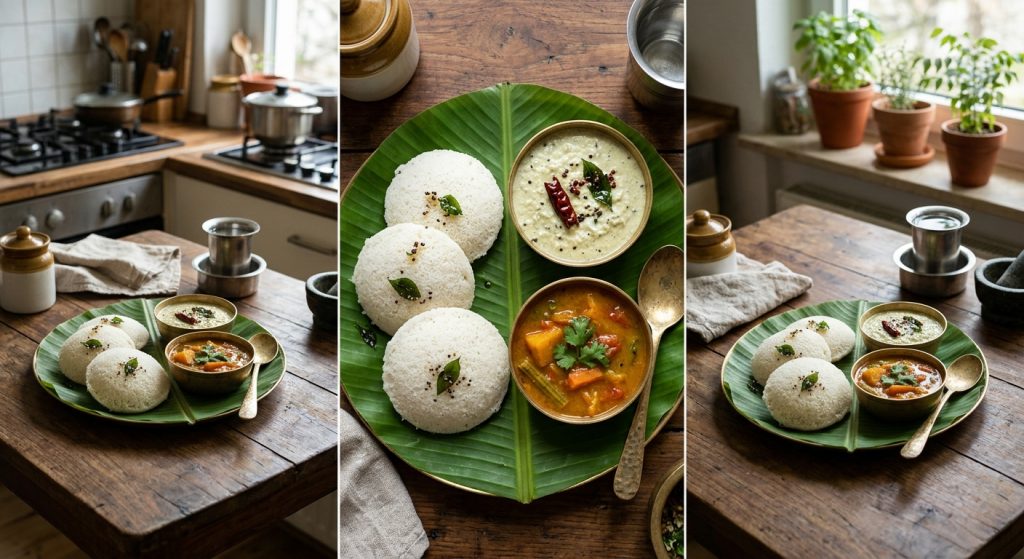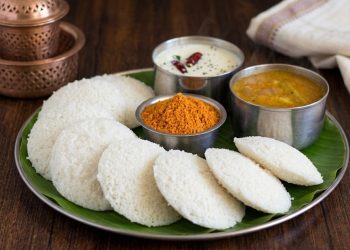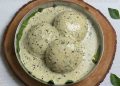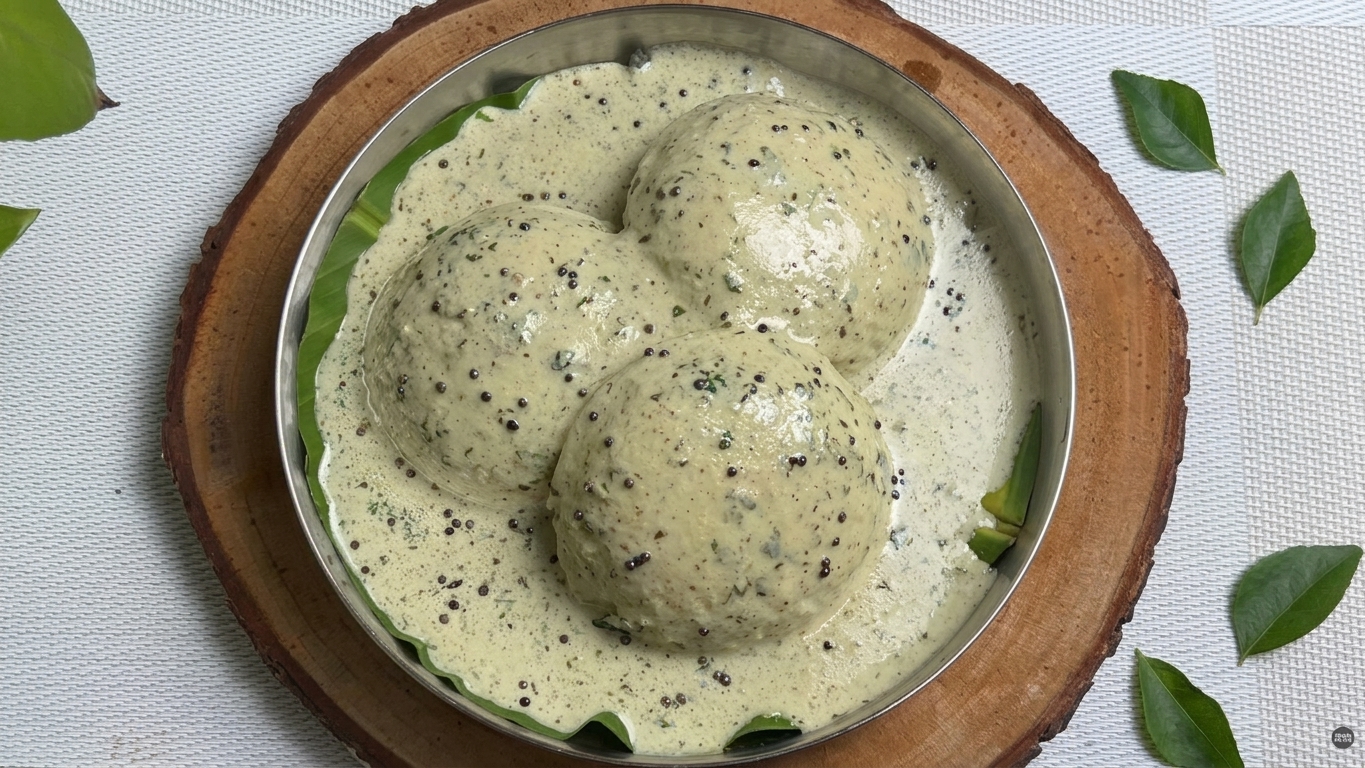
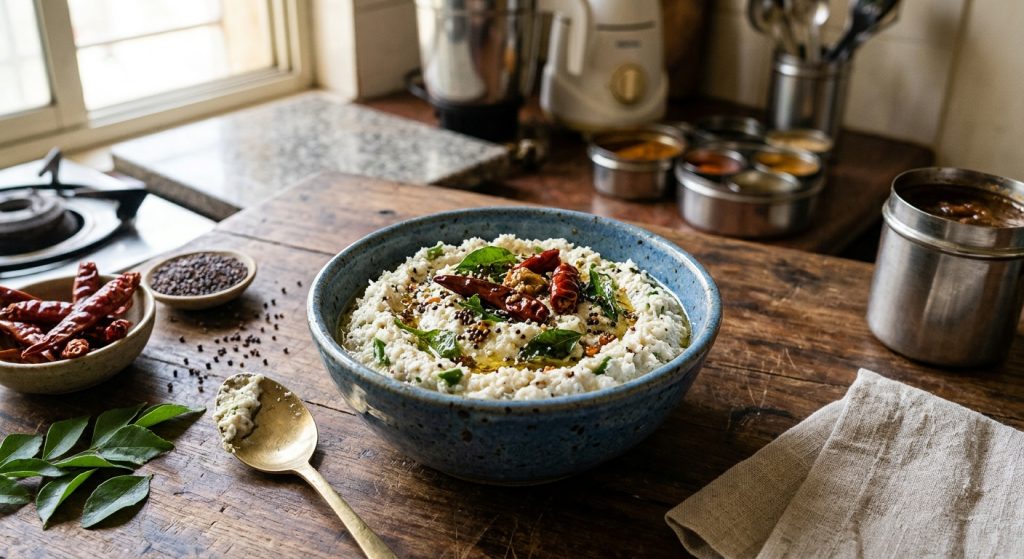
Udupi Coconut Chutney brings a little of coastal Karnataka to the breakfast table: creamy fresh coconut, the gentle nuttiness of roasted gram and peanuts, a lift of ginger and green chillies, and a fragrant curry-leaf tempering. A brief pulse of coriander leaves keeps the chutney flecked with green. It is lovely beside soft idlis, crisp dosas or hot vadas—and its flavours open the door to a much bigger story about Udupi’s vegetarian cooking traditions.
The Fascinating History of Udupi Coconut Chutney: From Temple Kitchens to Breakfast Tables
To understand how that simple bowl of chutney became associated with a place, travel in the story from the breakfast table to Udupi itself, a coastal town where temple traditions, local ingredients and generations of cooks have shaped a distinctive vegetarian food culture. Its history is richer than any single chutney recipe.
Udupi is a coastal town in Karnataka known for its Sri Krishna Temple and its long vegetarian food traditions. The temple is closely associated with the 13th-century philosopher Madhvacharya. For more regional context, explore Karnataka Tourism’s guide to the state’s cuisine. Over generations, temple food customs and the surrounding region’s abundant coconut, lentils and spices helped shape a distinctive culinary identity. That does not mean today’s coconut chutney can be traced to one medieval recipe; its exact origin is not documented.
An interesting distinction often gets lost when we talk about “authentic” Udupi food. Traditional temple preparations generally avoid onion and garlic, whereas modern homes and restaurants have developed many variations. This recipe includes garlic for its warm, punchy flavor, so it is best described as Udupi-style coconut chutney rather than a strict temple-style preparation.
The story took another turn as Udupi restaurateurs and cooks brought South Indian vegetarian food to growing cities during the 20th century. In busy dining rooms, idli, dosa and vada were served with their deliciously practical companions: sambar and fresh chutneys. For countless diners outside coastal Karnataka, the word “Udupi” became a familiar sign of a comforting vegetarian meal.
And what makes a humble chutney so memorable? The coconut offers natural richness, fried gram gives it body, and a little tamarind adds brightness. A quick pulse of coriander leaves creates fresh green speckles. Finally, oggarane—the Kannada name for a seasoned oil tempering—brings mustard seeds, golden urad dal and fragrant curry leaves together in a few sizzling seconds.
So when you scoop up this chutney with a warm idli, you are enjoying a modern homemade version of a dish connected to a much larger culinary story: coastal ingredients, temple-influenced vegetarian traditions, and the restaurants that carried Udupi’s flavors far beyond Karnataka.
Why This Udupi Coconut Chutney Recipe Is Special
Fresh coconut gives the chutney its creamy base, while fried gram lends body and peanuts add a subtle nutty taste. Tamarind balances the richness with a little tang. The final mustard seed, urad dal and curry leaf tempering gives it a familiar South Indian aroma.
Tips for Perfect Udupi Coconut Chutney
- Let the sautéed coconut mixture cool before grinding.
- Pulse the coriander briefly instead of blending continuously; this keeps the chutney speckled with fresh green.
- Adjust the amount of green chilies to suit your spice preference.
- Add water gradually: a thicker chutney works well with idli, while a slightly looser one is lovely with dosa.
- Use freshly grated or chopped coconut for the freshest flavor.
What to Serve with Udupi Coconut Chutney
Enjoy this chutney with soft idlis, crispy dosas, medu vadas or uttapam. For a South Indian breakfast spread, pair it with sambar and your favorite freshly cooked tiffin. You can also try our minty potato rava dosa or compare this version with our Bangalore hotel-style coconut chutney.
Frequently Asked Questions
Can I make Udupi Coconut Chutney without mint? Yes. Mint is optional; coriander alone adds fresh green flecks.
Why add fried gram? Fried gram (pottukadalai) helps thicken the chutney and adds a gentle roasted flavor.
How do I keep Udupi Coconut Chutney speckled with coriander? Grind the coconut base first, then add coriander and pulse once or twice rather than blending it for a long time.
How should I store leftovers? Refrigerate promptly in a clean, airtight container and use as soon as practical, ideally within 1–2 days. Stir before serving.
Udupi Coconut Chutney Recipe (Hotel Style)
Ingredients
For Sauteing
- 1 tsp oil
- 1 tbsp chana dal
- 2 tbsp peanuts
- 3 pcs green chilies
- 3 cloves garlic cloves
- ½ inch ginger
- 1 inch tamarind
- 2 pcs sprigs curry leaves
- 3 tbsp fried gram pottukadalai
- ¾ cup fresh coconut pieces
- ½ tsp salt
For Grinding
- Water as needed for initial grinding
- 1/2 cup coriander leaves fresh
- 4 pcs mint leaves optional
- ½ cup water
- ¼ cup water optional, for adjusting consistency
For Tempering
- 1 tsp coconut oil
- 1 tsp mustard seeds
- 1 tsp urad dal
- 10 pcs curry leaves
Instructions
Sauteing the Base Ingredients
- Heat 1 tsp oil in a pan over medium heat. Add 1 tbsp chana dal and 2 tbsp peanuts. Sauté briefly until aromatic.1 tsp oil, 1 tbsp chana dal, 2 tbsp peanuts
- Add 3 green chilies, 3 garlic cloves, ½ inch ginger, a tiny piece of tamarind and 2 sprigs curry leaves. Sauté everything together for approximately 30 seconds.3 pcs green chilies, 3 cloves garlic cloves, ½ inch ginger, 1 inch tamarind, 2 pcs sprigs curry leaves
- Lower the heat or turn it off. Add 3 tbsp fried gram (pottukadalai), ¾ cup fresh coconut pieces and ½ tsp salt. Sauté for another minute, then allow the mixture to cool completely.3 tbsp fried gram, ¾ cup fresh coconut pieces, ½ tsp salt
Grinding the Coconut Chutney
- Transfer the cooled coconut mixture into a mixer grinder jar. Add a little water as needed and grind into a paste.Water
- Add a handful of fresh coriander leaves, a few mint leaves (optional) and ½ cup water. Pulse grind only once or twice to retain the beautiful green flecks and fresh texture. Avoid grinding continuously.1/2 cup coriander leaves, 4 pcs mint leaves, ½ cup water
- Transfer the chutney to a serving bowl. Add up to ¼ cup additional water, if needed, to adjust its consistency. Mix well.¼ cup water
Preparing the Tempering (Tadka)
- Heat 1 tsp coconut oil in a small tempering pan. Add 1 tsp mustard seeds and allow them to splutter.1 tsp coconut oil, 1 tsp mustard seeds
- Add 1 tsp urad dal and 1 sprig curry leaves. Sauté until the urad dal turns lightly golden and the curry leaves become aromatic.1 tsp urad dal, 10 pcs curry leaves
- Immediately pour the hot tempering over the prepared coconut chutney. Mix gently to distribute the flavors.
Serving
- Serve fresh Udupi coconut chutney with hot idlis, crispy dosas, medu vadas or uttapam.
Notes
- Fresh coconut: Use fresh coconut for the best flavor and creamy consistency.
- Perfect green texture: Pulse grind the coriander leaves only once or twice. Avoid over-grinding to preserve the chutney’s attractive green flecks.
- Consistency: Add water gradually. Keep the chutney thicker for idlis and slightly thinner for dosas.
- Spice level: Adjust the green chilies according to your taste.
- Fried gram: Pottukadalai adds thickness and a mild roasted flavor.
- Tempering: Coconut oil enhances the traditional South Indian flavor, but regular cooking oil can also be used.
- Storage: Refrigerate leftovers promptly in an airtight container and preferably consume within 1–2 days.