Some recipes are special not because they use expensive ingredients, but because they remind us of people we love. For me, Kathiyawadi Suki Bhaji is one of those recipes.
Whenever I think about this spicy Gujarati potato shaak, I remember visiting my grandma and grandpa when I was young. My grandmother would make Gujarati dal, soft phulka rotis, rice and this delicious potato curry. It was a simple meal, but one I still remember fondly. And what makes the recipe even more special? My grandfather was the one who taught me how to make it.
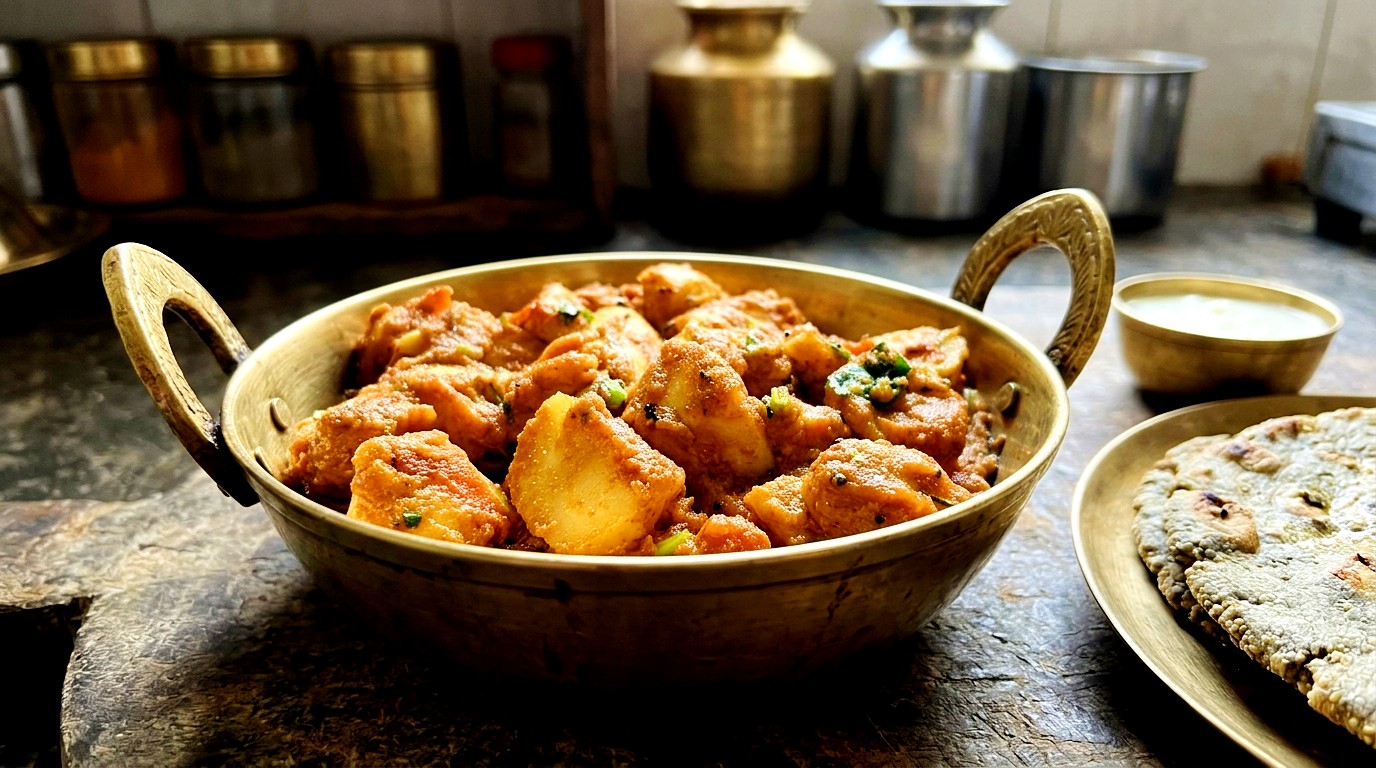
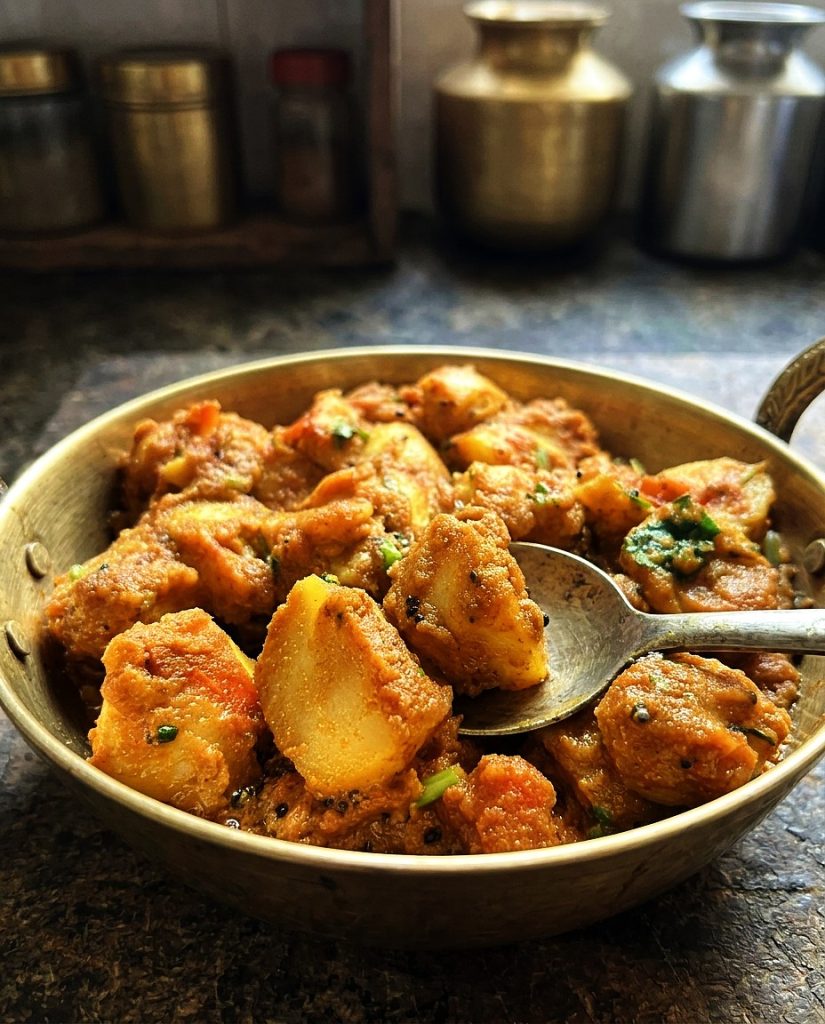
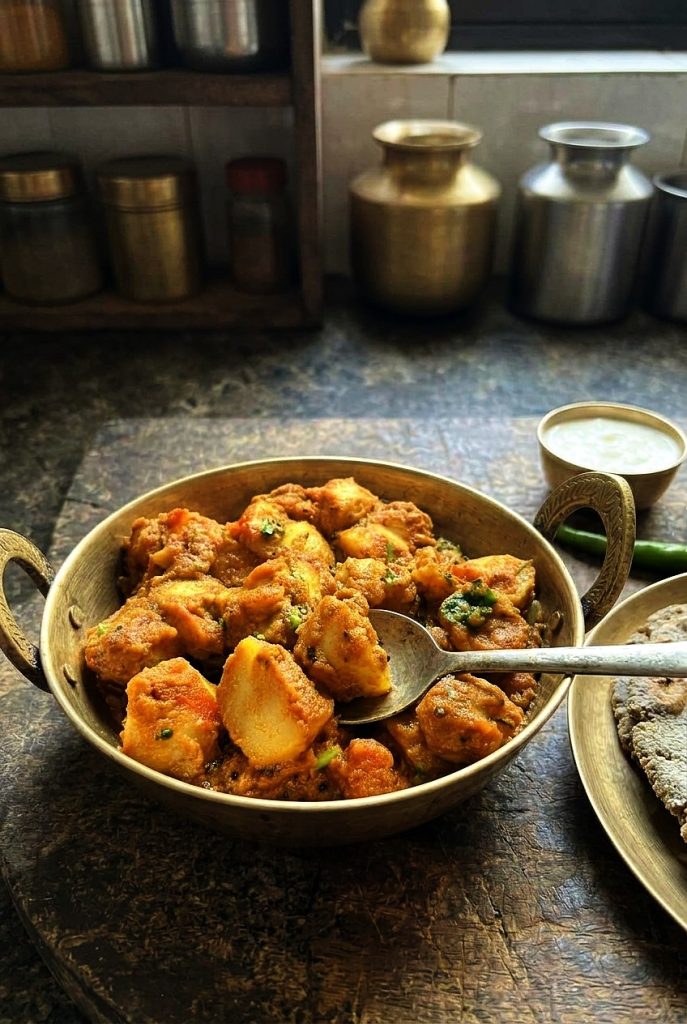
This Kathiyawadi Suku Bateta Nu Shaak is a dry-style Gujarati potato curry: tender potato cubes generously coated in a thick, spicy tomato masala with dhania-jeera, ginger, coriander, red chilli, mustard seeds and hing. I am sharing it as a little piece of my childhood and a way of keeping my grandfather’s cooking close to my heart.
A Recipe That Brings Back My Grandparents’ Memories
There is something beautiful about the food we grow up eating. Years may pass, our kitchens may change, and we may discover hundreds of new dishes. Yet certain recipes can take us straight back to childhood.
I remember visiting my grandparents and enjoying my grandmother’s comforting Gujarati meals. Gujarati dal, phulka roti, rice and this potato shaak were all part of those memories. Nothing about the meal needed to be elaborate.
My grandfather taught me this particular shaak. I love the simplicity of his method: mix dhania-jeera powder, chilli, turmeric, ginger and chopped coriander first; soften tomatoes in a mustard-and-hing tempering; add red chilli paste; then toss the potatoes with the masala. A handful of ordinary ingredients becomes something full of character.
Family recipes are about much more than what goes into the pan. They are also about the people who taught us, the meals we shared and the memories we carry forward.
From Kathiyawad’s Everyday Kitchens to the Gujarati Family Thali
Kathiyawad is a region of Saurashtra in Gujarat, western India, whose home cooking is associated with boldly seasoned, satisfying dishes. In Gujarati, bateta means potatoes, shaak means a vegetable preparation, and suku means dry. Suku Bateta Nu Shaak is literally a dry potato curry.
Unlike rasawala bateta nu shaak, in which potatoes are served with a thinner gravy, suki bhaji has just enough masala to coat the potatoes. The tomato-spice mixture should cling to every cube rather than form a pool of sauce.
There are many Gujarati potato-shaak variations. Some use green chillies or garlic; some omit tomatoes. My grandfather’s version is a tomato-based, no-onion, no-garlic preparation with both red chilli powder and red chilli paste. Although Kathiyawadi meals are often associated with bajra rotla, my memories of this shaak will always be connected to my grandmother’s dal, phulka and rice. Regional cooking can be shared across many homes while still feeling deeply personal.
What Makes This Kathiyawadi Suki Bhaji Special?
- A recipe with a family story. My grandfather taught me how to make it.
- Bold, spicy masala. Red chilli paste and powder give it a chilli-forward character.
- Dry but generously coated. The tomatoes break down into a thick masala that hugs the potato cubes.
- Everyday ingredients. Potatoes, tomatoes and familiar Gujarati spices do the work.
- A complete Gujarati meal. Serve it with Gujarati dal, phulka and rice.
Ingredients and What They Add
Potatoes (Bateta)
Use boiled potatoes that are tender but firm enough to hold their shape. Waxy or all-purpose potatoes are ideal; cut them into medium cubes so they do not break while tossing.
Tomatoes (Tameta)
Ripe tomatoes add tanginess and body. As they soften, their juices combine with the spices to create the thick coating that makes this particular shaak so satisfying.
Dhania-Jeera and Turmeric
Dhania-jeera, the Gujarati coriander-cumin spice blend, adds warm earthy depth. Turmeric gives the potatoes a golden colour and a subtle savoury background.
Two Forms of Red Chilli
Kashmiri red chilli powder lends rich colour and some warmth; hot red chilli paste supplies the sharper heat. Kathiyawadi food can be boldly spiced, and this recipe is intended to be spicy rather than mild. Chilli pastes vary in strength, so adjust to your own preferred heat.
Ginger, Coriander, Mustard and Hing
Chopped ginger adds freshness and warmth. Mustard seeds crackle in hot oil, while hing (asafoetida) provides a savoury tempering note. Fresh coriander is mixed into the masala and used again as garnish.
How to Make Kathiyawadi Suki Bhaji at Home
My grandfather’s approach is straightforward: prepare the spice mixture first, cook the tomato base, then toss the potato cubes until they are richly coated. The precise quantities in the recipe card are a proposed spicy balance, so feel free to adjust them as you make this family recipe your own.
1. Boil and cube the potatoes
Boil potatoes until just tender. Cool, peel and cut into medium pieces. They should be cooked through but not falling apart.
2. Mix the spice masala
In a bowl combine dhania-jeera powder, Kashmiri red chilli powder, turmeric, finely chopped ginger and fresh coriander. Keep this ready beside the stove.
3. Temper mustard seeds and hing
Heat oil in a kadai over medium heat. Add mustard seeds and let them crackle, then add hing. Avoid burning the tempering.
4. Sauté the tomatoes
Add chopped tomatoes and salt. Sauté for 2–3 minutes, stirring occasionally, until the tomatoes begin to soften and release their juices.
5. Add the chilli paste
Stir in the red chilli paste and cook for about a minute so that it blends into the tomato masala.
6. Add the potatoes and prepared masala
Add the boiled potato cubes and the spice mixture. Gently toss over medium-low heat for 2–3 minutes until the masala becomes thick and clings to the potatoes. If the spices threaten to catch on the pan, use a splash of water; this is suki bhaji, not a gravy curry.
7. Garnish and serve
Finish with fresh coriander leaves. Serve hot with soft phulka rotis, Gujarati dal and rice—the meal that always brings back my grandparents’ memories.
Tips for Thick, Spicy Gujarati Dry Potato Sabzi
- Do not overboil the potatoes. They need to survive tossing in the kadai.
- Use enough tomato. This version has a generous tomato-spice coating, not just a dusting of seasoning.
- Control heat through the chilli paste. Kashmiri powder is generally milder, but hot paste can vary enormously.
- Keep the finished texture dry. The masala should stick to the potato pieces, with no pool of gravy.
- Taste at the end. Adjust salt and heat based on your tomatoes and chilli paste.
What to Serve With Kathiyawadi Bateta Nu Shaak
My favourite serving combination will always be Gujarati dal, soft phulka roti and steamed rice. The comforting dal balances the fiercely spiced, tomato-coated potatoes. Bajra rotla is another fitting regional accompaniment, and the shaak also works with thepla.
For another comforting Gujarati meal idea, you can pair this dry potato sabzi with Gujarati kadhi and rice.
Can You Make This Bateta Nu Shaak Without Onion and Garlic?
Yes. In fact, this recipe uses neither onion nor garlic. Mustard seeds, hing, ginger, coriander-cumin powder, chilli and tomatoes give the shaak plenty of flavour without them.
Frequently Asked Questions
What is the difference between suki bhaji and rasawala bateta nu shaak?
Suki bhaji is relatively dry, with spices coating the potatoes. Rasawala bateta nu shaak has more liquid and a gravy-like consistency.
Can I use raw potatoes instead of boiled potatoes?
Yes, but you will need more cooking time and some water to cook them through. For the short final sauté in this recipe, preboiled potatoes are the more reliable choice.
How spicy is Kathiyawadi Suki Bhaji?
This is a deliberately spicy variation. The Kashmiri chilli powder gives colour, while the hot red chilli paste contributes substantial heat. Start with less paste if yours is particularly potent.
Can I prepare this Gujarati potato curry ahead of time?
Yes. Cool it promptly, refrigerate in a covered container, and reheat until piping hot. Add a small splash of water when reheating if the masala has dried out.
Kathiyawadi Suki Bhaji (Suku Bateta Nu Shaak)
Ingredients
- 500 g boiled potatoes, peeled and cubed
- 2 medium ripe tomatoes, finely chopped (250–300 g)
- 2½ tbsp oil
- 1 tsp mustard seeds
- ¼ tsp hing (asafoetida)
- 2½ tsp dhania-jeera powder
- 2 tsp Kashmiri red chilli powder
- ½ tsp turmeric powder
- 1½ tsp fresh ginger , finely chopped
- 3 tbsp fresh coriander , chopped
- 1½ tbsp hot red chilli paste
- 1 tsp salt, or to taste
- 1 tbsp fresh coriander for garnish
Instructions
- Boil potatoes until just tender, cool, peel and cut into medium cubes.500 g boiled potatoes, peeled and cubed
- In a bowl mix dhania-jeera powder, Kashmiri red chilli powder, turmeric, chopped ginger and 3 tbsp chopped coriander.2½ tsp dhania-jeera powder, 2 tsp Kashmiri red chilli powder, ½ tsp turmeric powder, 1½ tsp fresh ginger, 3 tbsp fresh coriander
- Heat oil in a kadai over medium heat. Add mustard seeds until they crackle, then add hing.2½ tbsp oil, 1 tsp mustard seeds, ¼ tsp hing (asafoetida)
- Add tomatoes and salt. Sauté 2–3 minutes until softened.2 medium ripe tomatoes, finely chopped (250–300 g), 1 tsp salt, or to taste
- Stir in hot red chilli paste and sauté for 1 minute.1½ tbsp hot red chilli paste
- Add the prepared spice mixture and boiled potato cubes. Toss gently over medium-low heat for 2–3 minutes until the thick tomato masala coats the potatoes. If needed, add 1–2 tablespoons of water to prevent sticking.500 g boiled potatoes, peeled and cubed, 2½ tsp dhania-jeera powder, 2 tsp Kashmiri red chilli powder, ½ tsp turmeric powder, 1½ tsp fresh ginger, 3 tbsp fresh coriander
- Finish with fresh coriander and serve warm with Gujarati dal, phulka roti and rice.1 tbsp fresh coriander
Notes
Which potatoes work best?
Waxy or all-purpose potatoes hold their shape well. In German supermarkets, look for festkochend or vorwiegend festkochend potatoes.
My Grandfather’s Recipe, Served With Memories
Every family has dishes that hold a special place in its memories. For me, Kathiyawadi Suki Bhaji is one of them. It reminds me of visiting my grandparents, of my grandmother’s comforting Gujarati meals and of my grandfather sharing the method for a recipe I still treasure.
The ingredients may be ordinary, but the memories behind them are anything but. If you make this Kathiyawadi Suku Bateta Nu Shaak, tell me how you serve it in your home. Do you have a potato shaak that reminds you of your childhood or grandparents? I’d love to hear about it in the comments.