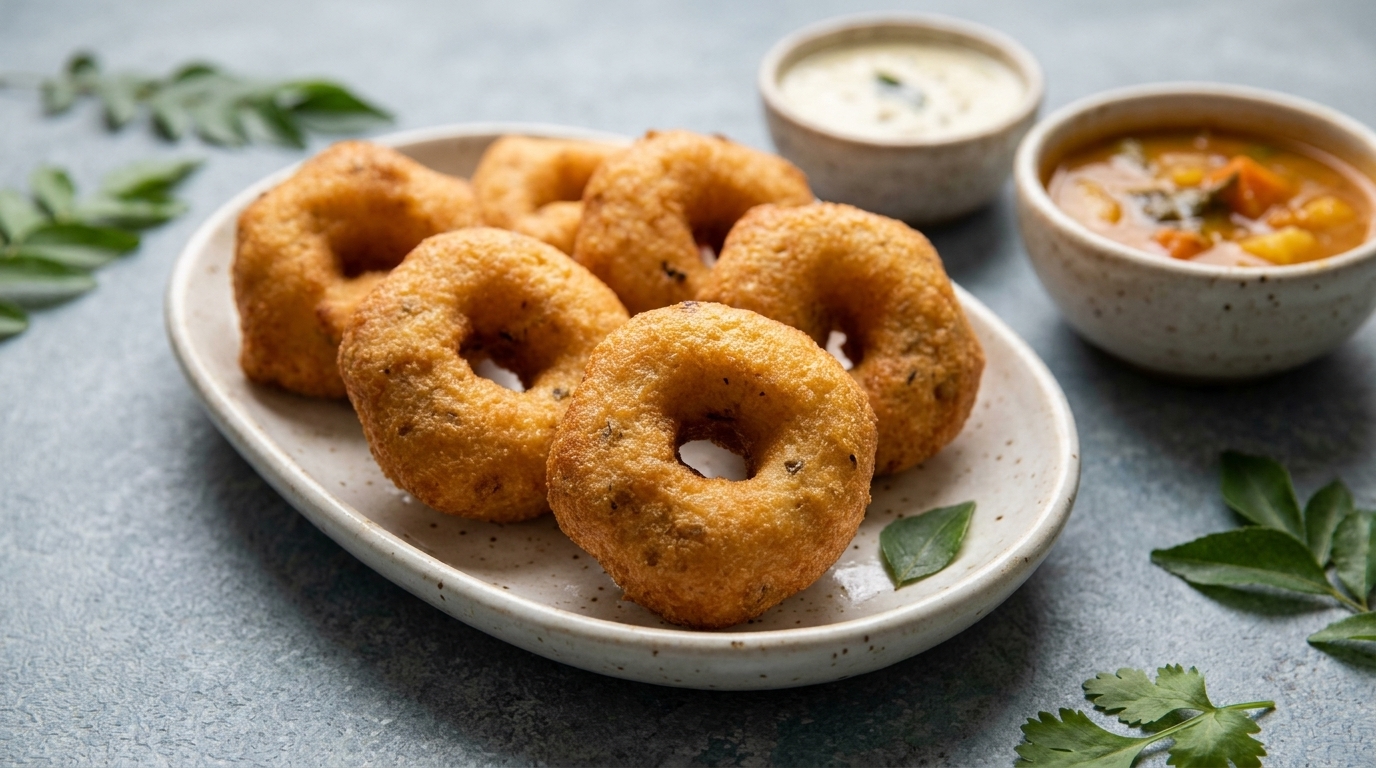
The best medu vada announces itself with a crisp bite, then turns light and tender inside. This crispy medu vada recipe starts with my wife’s simple note: soak urad dal for 3–4 hours, grind it very fine, and whip the batter in one direction until airy. The small bowl of water used for the float test is the clever little kitchen check worth remembering.
Medu Vada and the South Indian Breakfast Plate
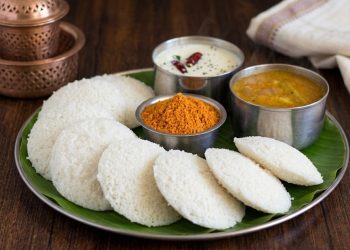
Medu vada is the ring-shaped urad dal fritter served in many South Indian homes and breakfast restaurants. It is often paired with sambar and coconut chutney; in sambar vada, the fritters are served soaked in warm lentil stew. The familiar hole is practical too: it helps the hot oil reach the middle of a thick fritter. Known as garelu in Telugu, ulundu vadai in Tamil, uddina vade in Kannada and uzhunnu vada in Malayalam, the dish connects breakfast counters, festive meals and home kitchens across South India. Each name carries its own regional associations, but the familiar crisp ring and soft urad dal centre unite them.
How to Make Crispy Medu Vada Without Absorbing Too Much Oil
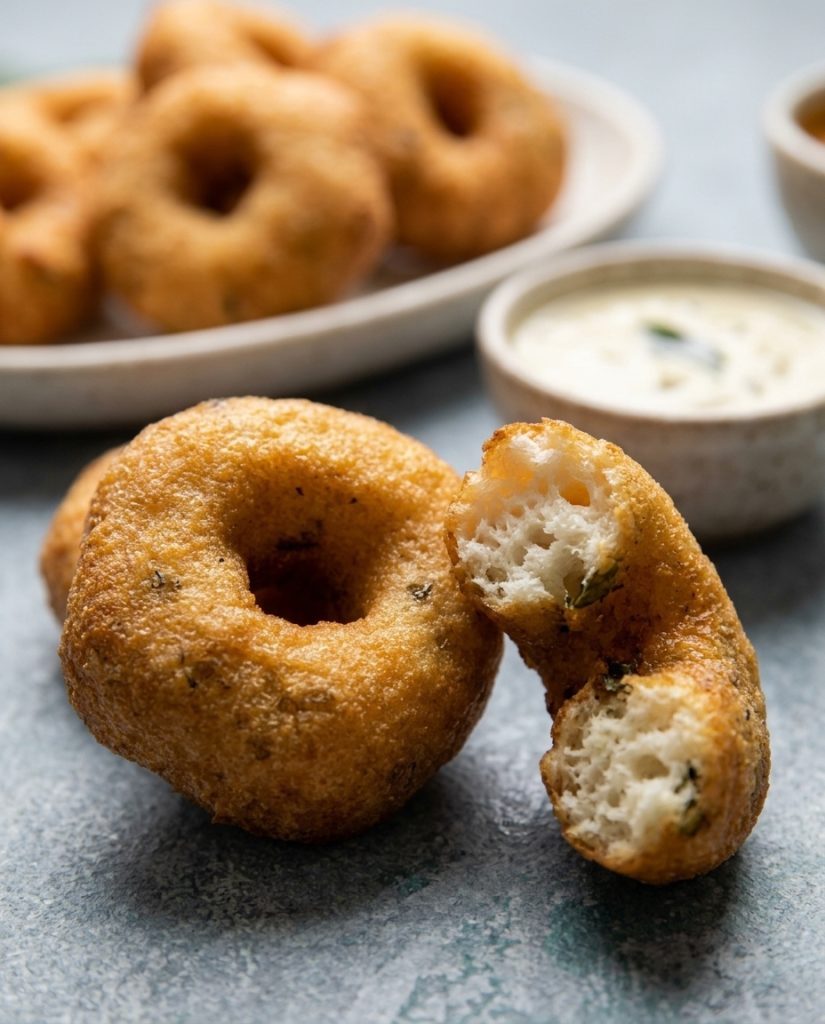
Too much grinding water makes the batter spread and soak up oil. Oil that is not hot enough can also leave a greasy result, while oil that is too hot browns the surface before the centre cooks. Aim for a thick spoonable batter and steady frying temperature around 170–180°C, making small batches.
Medu Vada Batter Consistency, Float Test and Shaping
After grinding in a small jar, beat the batter vigorously in one direction for 3–5 minutes. Drop a pea-sized bit into a bowl of water. If it floats, the batter has trapped air. If it sinks, beat longer while avoiding extra liquid. The float test does not replace checking thickness or frying temperature.
Lightly moisten your palm, shake off all excess water, shape a small ring and carefully slide it into the oil away from your body. My wife’s notes also mention a small tea strainer as a shaping aid. Use a clean, lightly moistened strainer, with no dripping water, to form the ring; release the shaped batter carefully using a suitable utensil. Never immerse a wet strainer in hot oil. A dedicated vada maker is another option if hand shaping is difficult.
Rice, Seasonings and Consistency
Our current recipe uses 1 cup urad dal and 2 tablespoons rice flour, with hing, salt, cumin, green chillies, coriander and ginger. Rice flour is folded into the ground batter for crispness; the light interior comes from well-aerated dal. Hing adds flavour, not chemical leavening.
How to Serve Crispy Vada
Serve as soon as they are cooked, beside Udupi coconut chutney and a bowl of mixed vegetable sambar. For another dal-based snack, visit our moong dal wada recipe.
Frequently Asked Questions
Why does the vada batter sink in water?
It may need more beating, or may be too runny to trap enough air. Keep it thick and try whisking again.
Can I fry the vadas at very high heat to make them crisp?
No. Extremely hot oil can brown the exterior before the centre sets.
Why are my vadas hard?
Hard or dense vadas can result from insufficient soaking, coarse grinding, a poorly aerated batter or over-frying. Use fresh dal, grind in short bursts with minimal cold water and whisk until light. Fry one test vada before shaping the rest.
Why does medu vada absorb too much oil?
Very wet batter, cool oil and overcrowding the pan can all lead to a greasy vada. Drain the soaked dal thoroughly, add cold water sparingly, and fry small batches around 170–180°C, allowing the oil to recover between batches.
How do I fix watery medu vada batter?
If it is only slightly loose, add a little rice flour, a teaspoon at a time, until it holds a mound on a spoon. Avoid adding too much flour because it can make the vadas dense. A very runny batter may be better used for a different preparation.
Can I make medu vada in a mixer grinder instead of a wet grinder?
Yes. Use a small mixer jar, grind in batches with tiny splashes of cold water and pause if the jar heats up. Transfer to a bowl and whisk for 3–5 minutes until light and fluffy.
Why does medu vada have a hole in the middle?
The hole increases the surface exposed to the hot oil so a thick fritter cooks more evenly. If ring shaping is difficult, try smaller round fritters and check that the centre is cooked.
Why is my vada brown outside but raw inside?
The oil may be too hot or the vada too thick. Lower the heat, make smaller rings and fry a test piece at a steady moderate temperature. The middle should be fully cooked, not wet or pasty.
How do I keep medu vada crispy and reheat leftovers?
Drain on a wire rack rather than stacking hot vadas. For leftovers, refrigerate promptly and reheat in an oven or air fryer around 180°C until hot and crisp. Check after a few minutes; timing depends on size.
Can I prepare medu vada batter in advance?
Yes. Refrigerate the unseasoned batter in a covered container and use within 24 hours. Add the seasonings before frying and whisk briefly if needed. Unlike idli batter, medu vada batter does not need fermentation.
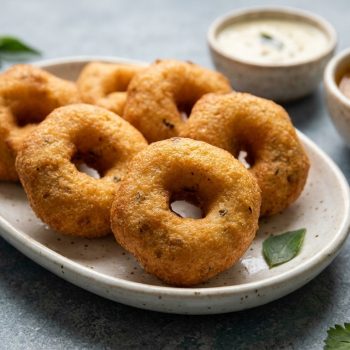
Crispy Medu Vada (Not Oily)
Ingredients
Ingredients
- 1 cup urad dal (hulled)
- 2 tbsp Rice Flour
- ¼ tsp Hing , asafoetida
- 3-4 tbsp cold water , only as necessary to grind
- ¾ tsp salt , to taste
- ½ tsp cumin seeds
- 2 pcs green chillies, finely chopped
- 2 tbsp fresh coriander, finely chopped
- 1 tsp grated ginger
- oil for deep frying as needed
- as needed water to wet hands
Instructions
Method
- Rinse the urad dal and soak in plenty of water for 3–4 hours, then drain thoroughly.1 cup urad dal (hulled)
- Using a small mixer jar, grind to a smooth, thick paste with only tiny additions of cold water. Batter should hold a mound on a spoon, not pour.1 cup urad dal (hulled), 3-4 tbsp cold water
- Transfer to a bowl and beat vigorously in one direction for 3–5 minutes. Drop a pea-sized portion in a small bowl of water: floating indicates aeration. If it sinks, beat more while keeping the batter thick.
- OR Use a hand whisk to whisk the ground urad dal until it’s light and fluffy – approximately 5 minutes. You’ll feel the batter becoming airy and fluffier and also getting lighter in colour from a yellow to pale white.
- Mix in the salt and hing and set aside for 10 minutes. Hing adds flavour; the air incorporated by whisking gives the batter its light texture.¾ tsp salt, ¼ tsp Hing
- Gently fold in the rice flour, cumin, chopped green chillies, coriander and ginger.2 tbsp Rice Flour, ½ tsp cumin seeds, 2 pcs green chillies, finely chopped, 2 tbsp fresh coriander, finely chopped, 1 tsp grated ginger
- Heat frying oil to around 170–180°C. Lightly moisten your hand or a small perforated strainer, shake off excess water, shape a ring and carefully slide it into the oil away from you.oil for deep frying, as needed water
- Cook in small batches without crowding, turning occasionally, until evenly deep golden and cooked through, about 4–6 minutes depending on thickness. Drain on a wire rack or paper and serve hot.oil for deep frying
Notes
- Allow 3–4 hours soaking in addition to prep.
- Fry at approximately 170–180°C; temperature and batch size matter more than a fixed fry time.
- The float test suggests airiness but is not a guarantee that frying cannot be oily.
Do you shape medu vada on your palm or with a strainer?