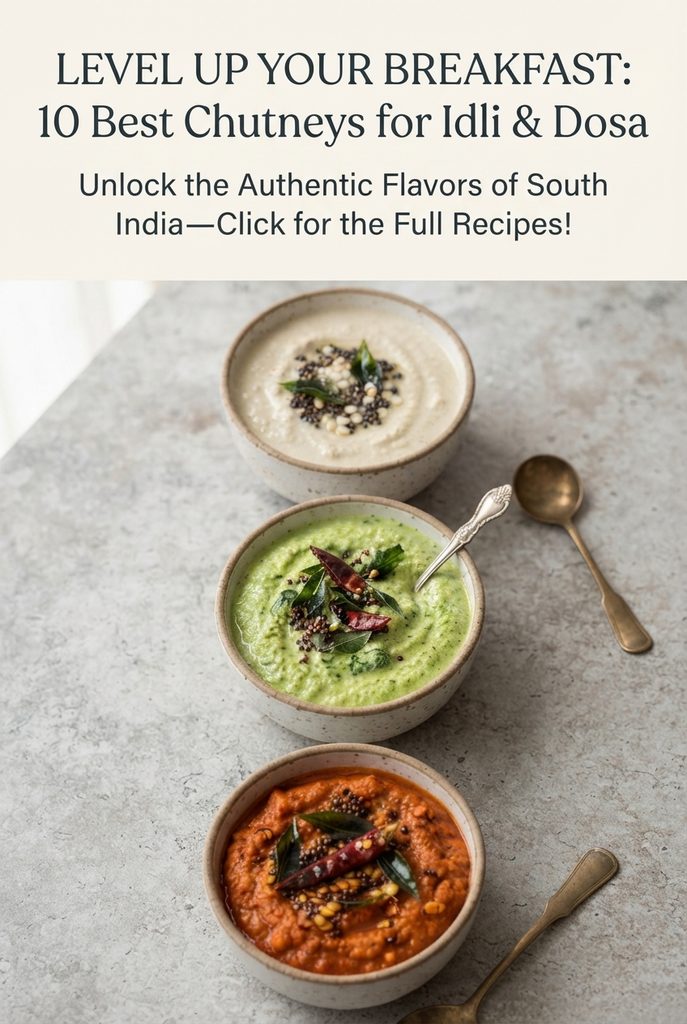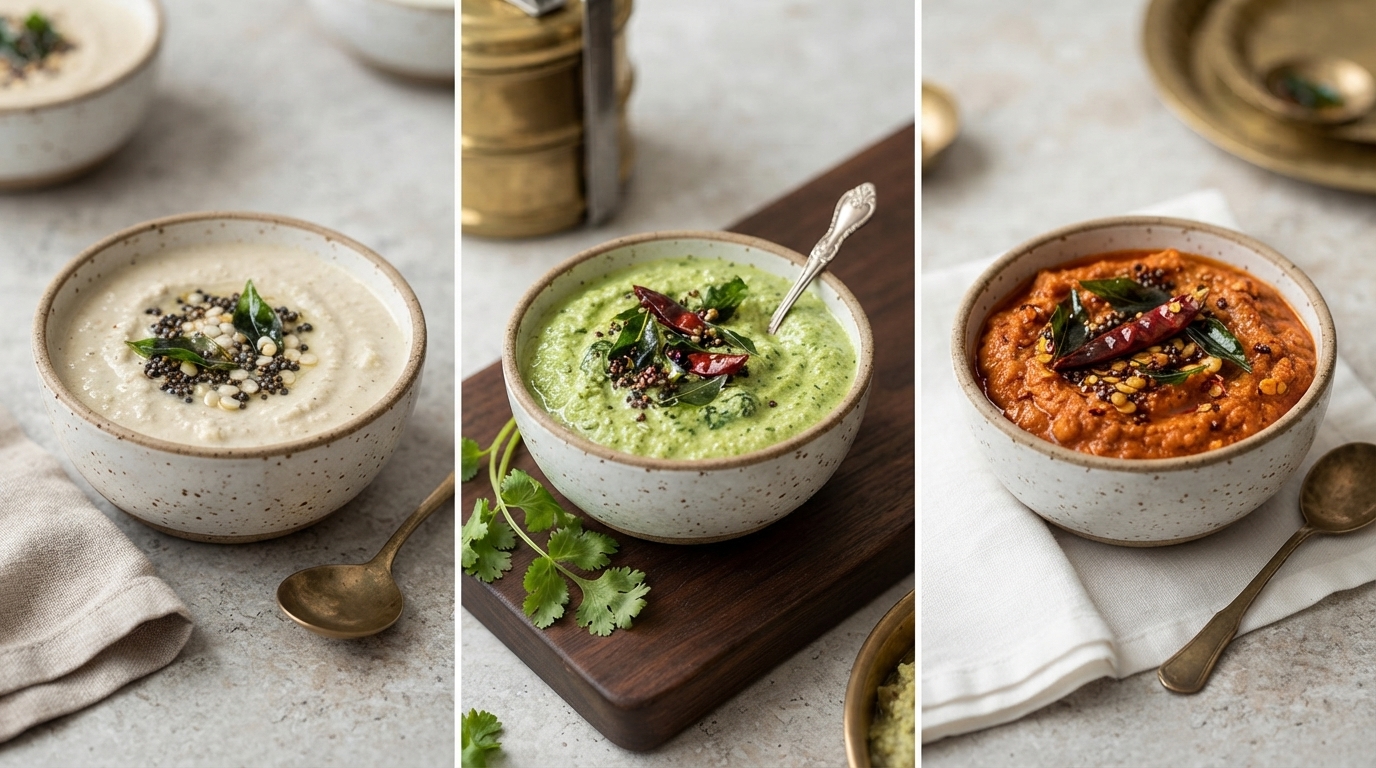
There is a special kind of happiness in dipping a hot, pillowy idli into a bowl of fresh chutney, then reaching for something completely different with the next bite. Some mornings call for creamy coconut; others need roasted peanuts, bright tomato or a generous hint of garlic. This collection of 10 chutneys for idli and dosa brings together recipes from our Flavors of Two kitchen—each with its own photo, flavour and story.
We begin with the South Indian chutneys that belong naturally beside idli and dosa, then travel into Gujarati, Maharashtrian and chaat-style favourites for anyone who likes a more adventurous breakfast spread. The last few are creative pairings, not claims about how these condiments are traditionally served.
How Chutney Became the Soul of a South Indian Breakfast
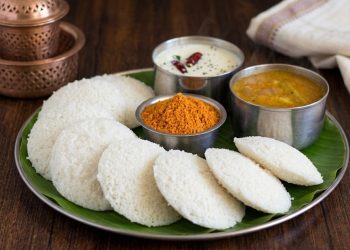
Picture a Bengaluru tiffin counter: steam rising from fresh idlis, a dosa crisping on the griddle and a ladle of chutney ready before the plate reaches the table. Across Karnataka, Udupi-linked vegetarian restaurants helped bring this style of breakfast to a wider public. But the chutney itself has never been one fixed recipe. Coastal coconut, Andhra groundnuts, tomato, chilli and the quick tempering of mustard seeds and curry leaves all bring local flavour to the same simple meal.
Food writing about Udupi restaurants and Bengaluru’s tiffin culture traces how those breakfast traditions spread, while collections of South Indian recipes show how varied coconut, peanut, tomato and herb-based chutneys can be. That is the spirit of this roundup: not ten versions of one sauce, but ten different reasons to make idli or dosa again. Read more about the history of idli and Udupi restaurants.
Which Chutney Should You Make First?
- For soft idli: start with Udupi coconut, Bangalore hotel-style coconut or Andhra peanut chutney.
- For crispy dosa: try red tomato chutney, palli peanut chutney or the garlicky tomato version.
- For a coconut-free chutney: pick the roasted-dal tomato chutney or Andhra peanut chutney; always check individual ingredients and allergens.
- For a more adventurous spread: add a small bowl of Gujarati garlic, fresh green chutney or sweet khajur imli.
- For something cooling: try the dahi pudina chutney alongside hot, spicy snacks.
10 Chutneys for Idli and Dosa: Our Recipe Collection
1. Udupi Coconut Chutney
Classic breakfast pairing • Creamy and fragrant
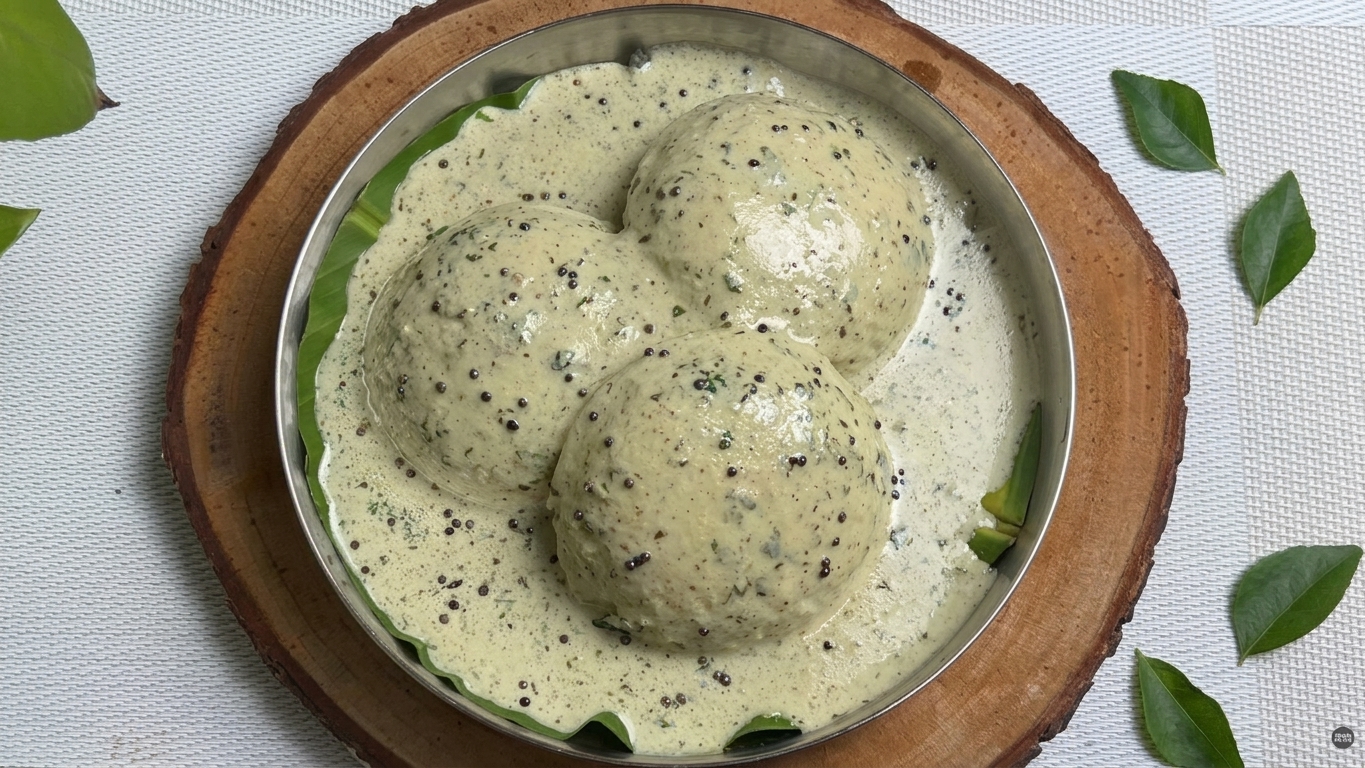
Begin with a chutney that feels made for a hot, fluffy idli. Fresh coconut forms the creamy base, while roasted gram, peanuts, green chillies and a fragrant tempering bring layers of texture and flavour. This is our home-style Udupi-inspired version, with garlic, rather than a claim that temple kitchens prepare it this way.
Try it with: soft idli, dosa or medu vada. Read the full recipe for its story of coastal Karnataka and Udupi food traditions.
View the complete Udupi Coconut Chutney recipe →
2. Bangalore Hotel-Style Coconut Chutney
Restaurant-inspired • Fresh and green

If you have ever stood at a Bengaluru breakfast counter with a crisp dosa and a little steel bowl of green chutney, you know that a spoonful can make the meal. Our Bangalore hotel-style version is a wonderful comparison with the Udupi coconut chutney: similar breakfast roots, yet a different balance of herbs, chilli and coconut.
Try it with: masala dosa, plain dosa or steaming idlis. Choose this one when you want that Karnataka tiffin-counter feeling.
View the complete Bangalore Hotel-Style Coconut Chutney recipe →
3. Andhra Palli Peanut Chutney
Coconut-free alternative • Nutty and tangy

Travel east in flavour and the coconut gives way to roasted groundnuts. Palli means peanut in Telugu, and this Andhra-style chutney has the richness to cling beautifully to a dosa. Roasted peanuts, chillies and tangy notes make it satisfying without needing coconut.
Try it with: idli, dosa and especially a crisp dosa whose edges can scoop up a thicker chutney.
View the complete Andhra Palli Peanut Chutney recipe →
4. Red Tomato Chutney with Roasted Dals
No coconut • Spicy, savoury and tangy
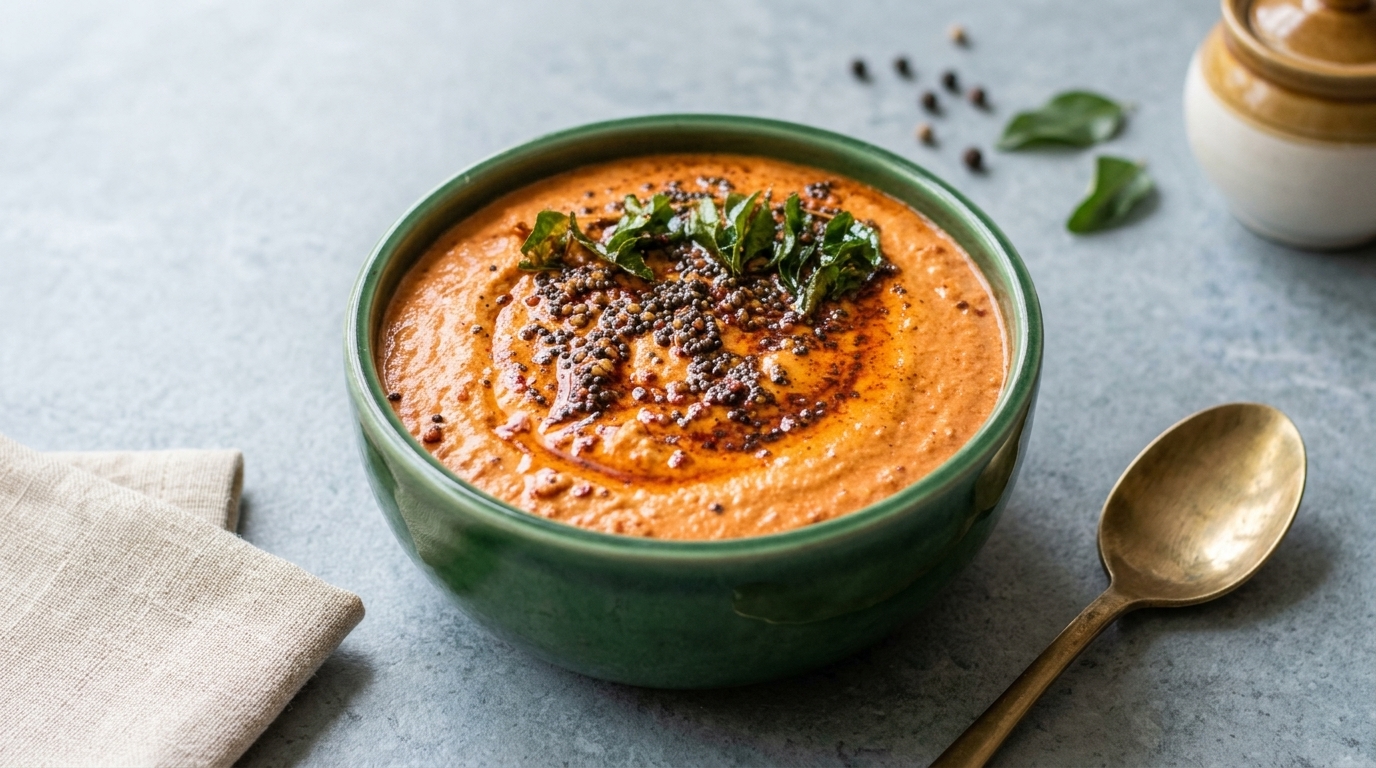
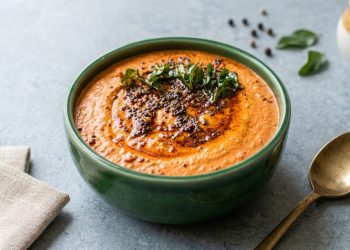
Here is our favourite kind of colour contrast: a vivid red spoonful beside pale, soft idlis. My wife’s tomato chutney uses chana dal and urad dal toasted until golden, then cooks red chillies, onion, ginger, garlic and tomato before grinding. The dals add body without coconut, and a little tamarind lifts the finish.
Try it with: idli, dosa or vada. Read the recipe for tips on balancing six dried red chillies and keeping the texture thick but spoonable.
View the complete Red Tomato Chutney with Roasted Dals recipe →
5. Garlic Tomato Chutney
Garlic-forward • Tomato-rich

Two red chutneys need not taste alike. This older Flavors of Two recipe puts the garlic-and-tomato combination in the spotlight, while the roasted-dal version above has a nuttier, thicker base. If you enjoy a bold tomato condiment, comparing these two recipes is half the fun.
Try it with: dosa, savoury snacks or as a punchy side to an everyday meal.
View the complete Garlic Tomato Chutney recipe →
6. Gujarati Garlic Chutney
Bold condiment • Garlicky and hot

Now we step beyond the usual South Indian breakfast accompaniments. Gujarati garlic chutney celebrates the sharpness of garlic and the heat of red chilli. It is not a traditional idli chutney, but a small dab beside dosa can be delightful if you love bold flavours.
Try it with: Gujarati snacks first; for dosa, serve a little on the side rather than treating it like a mild dipping chutney.
View the complete Gujarati Garlic Chutney recipe →
7. Maharashtrian Peanut, Garlic and Chilli Chutney
Regional variation • Nutty with a fiery kick

The peanut takes on another personality in this Maharashtrian favourite, where garlic and chilli share centre stage. Compared with the Andhra palli chutney, it is a reminder that a single ingredient can travel through Indian kitchens and become something quite different.
Try it with: roti or rice as intended, or offer a small spoonful with dosa for an adventurous variation.
View the complete Maharashtrian Peanut, Garlic and Chilli Chutney recipe →
8. Fresh Green Chutney for Chaat
Fresh herbs • Bright and zesty

After the deep reds and roasted nuts, a fresh coriander chutney changes the mood. This one was developed for chaat, with herbs, green chillies and lemon providing a lively, refreshing contrast. It is not the same as the green coconut chutney served at many tiffin shops.
Try it with: chaat, sandwiches or a little beside dosa when you want something light and herbal.
View the complete Fresh Green Chutney for Chaat recipe →
9. Khajur Imli (Date and Tamarind) Chutney
Chaat favourite • Sweet and sour

For readers who enjoy a sweet edge with savoury food, this date-and-tamarind chutney brings a completely different balance. It belongs to the world of chaat, not the classic South Indian breakfast plate, so think of it as an optional tasting-bowl addition rather than a substitute for coconut chutney.
Try it with: samosas, bhajiya and chaat; a tiny amount alongside dosa makes a playful sweet-sour contrast.
View the complete Khajur Imli (Date and Tamarind) Chutney recipe →
10. Dahi Pudina (Mint and Yogurt) Chutney
Cooling bonus • Mint and yogurt
We finish with something cool rather than fiery. This archival recipe combines whisked dahi (yogurt) with mint chutney and salt. It is a simple, refreshing dip, not a traditional idli or dosa chutney, but it rounds out a spread that ranges from creamy and nutty to sweet, sharp and herbal.
Try it with: snacks, pakoras or a small side bowl alongside a spicy dosa. Keep this yogurt-based chutney chilled.
View the complete Dahi Pudina (Mint and Yogurt) Chutney recipe →
How to Build a Chutney Platter That Actually Works
You do not need to make all ten. For a weekend breakfast, choose one creamy chutney (coconut or peanut), one tangy chutney (tomato) and, if you like, one bold extra (garlic or fresh green). Put the mildest bowls closest to the idlis and let everyone discover their favourite order. A little contrast is more satisfying than three chutneys that all taste equally hot.
Pair your chutney bowls with our Andhra–Telangana soft idli with idli rava or serve a few alongside red tomato chutney for a colourful breakfast. Warm sambar makes the spread even more comforting.
What Makes Hotel-Style Chutneys Different?
If you have eaten idli or dosa at a Bengaluru darshini or a South Indian tiffin counter, you have probably noticed that the chutney changes from place to place. One restaurant serves a pale, pourable coconut chutney; another brings a greener version, a thick peanut chutney, or a bright red chilli-tomato chutney. The colour alone does not tell you the ingredients. That red chutney might be tomato-based, onion-based, a chilli paste spread inside a Mysore masala dosa, or a different local preparation.
How to recreate the hotel-style experience: Try our Bangalore hotel-style coconut chutney for the green, coconut-based side; our Andhra peanut chutney for nutty richness; or our red tomato chutney with roasted dals for a deeper red, tangy contrast. They are three distinct recipes, not interchangeable copies of a single secret restaurant chutney.
Should Chutney for Idli Be Thick or Watery?
It depends on the bite you want. For idli, a slightly looser, pourable chutney can soak into the steamed crumb. For dosa, a thicker chutney clings nicely to the crisp surface. Start with the consistency specified in each linked recipe, then add drinking water in small spoonfuls if you want it thinner. Add too much at once and the flavour becomes diluted.
Why is my coconut chutney watery? Too much grinding water is a common cause; coconut quality and the amount of roasted gram also affect texture. Begin with a little water and blend gradually. If the finished chutney is thin, adding some additional freshly ground coconut or roasted gram may help, but it changes the original recipe’s proportions. For peanut or roasted-dal chutneys, allow a moment after blending: the ground ingredients may thicken as they absorb moisture.
Can You Make Chutney the Night Before?
For a busy breakfast, prepare the cooked tomato chutney ahead and refrigerate it promptly in a clean, covered container, following its individual storage advice. Fresh coconut, coriander and yogurt chutneys taste best made close to serving time and must be kept chilled. You can also roast the peanuts or dals ahead, keep them appropriately stored, and grind the chutney closer to breakfast. Never leave fresh chutney on a warm counter overnight.
Looking for No-Onion, No-Garlic Chutney?
Ingredient lists matter more than a chutney’s regional name. Some simple coconut chutneys can be prepared without onion or garlic, but our Udupi-inspired coconut chutney includes garlic, and the roasted-dal red tomato chutney includes both onion and garlic. We have not labelled either as a no-onion, no-garlic recipe. If those ingredients are important to avoid, check each linked recipe before cooking rather than assuming any green or white chutney qualifies.
Storage Tips and Frequently Asked Questions
Fresh coconut and yogurt chutneys are particularly perishable: make them close to serving time, use clean utensils and refrigerate promptly. Cooked tomato and dry-style chutneys keep differently, so follow each individual recipe rather than assuming one storage time works for all ten.
Which chutney is best for idli and dosa?
For a classic pairing, coconut chutney is a reliable choice with both. Andhra peanut chutney is another excellent option, while red tomato chutney gives a sharper, spicier contrast. The best choice depends on whether you want mild, nutty or fiery flavours.
What are the best chutneys for idli and dosa without coconut?
Try Andhra palli peanut chutney or our red tomato chutney thickened with roasted chana dal and urad dal. The garlic tomato and Gujarati garlic chutneys are further options if their specific ingredients suit your needs.
What is the difference between Andhra peanut chutney and Maharashtrian peanut chutney?
Both feature peanuts, but the Andhra palli version in this collection is a wetter, spoonable breakfast chutney, while the Maharashtrian peanut-garlic-chilli preparation has its own regional flavour profile and is commonly paired with roti or rice.
Are all ten recipes traditional chutneys served with idli?
No. The coconut, peanut and tomato chutneys are natural South Indian breakfast pairings. Gujarati garlic, green chaat chutney, date-tamarind chutney and dahi pudina are included as clearly labelled cross-regional serving ideas.
Can I prepare chutney ahead of time?
Some cooked chutneys can be made ahead, while fresh coconut, herb and yogurt versions are best served fresh. Refrigerate promptly and check each individual recipe for appropriate storage guidance.
If you could put just two chutneys beside your next dosa, which would you choose? Tell us your favourite combination—we love finding out which family flavours deserve a place on the breakfast table.